

David Gehry: Redefining Leadership Through Urgency and Compassion
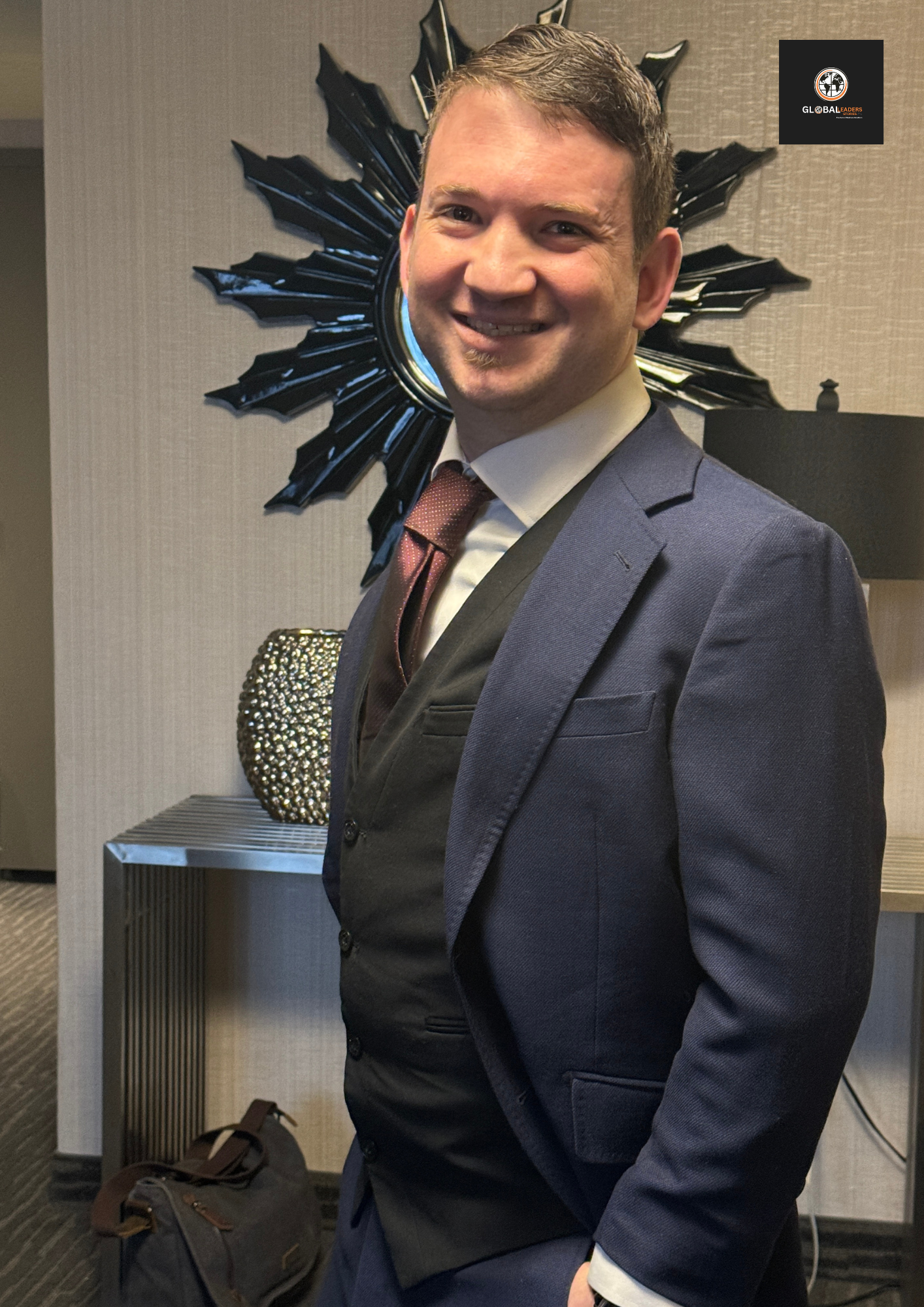
Some leaders are shaped by theory; others by lived experience. For David Gehry, it was the weight of responsibility in his earliest career — answering emergency calls as a young paramedic — that forged a deep understanding of how lives depend not only on individual skill, but on the systems supporting them. What began as a calling to serve in moments of crisis became the foundation of a lifelong mission: to design solutions that bridge the gap between people, policy, and progress.
“I realized early on that saving lives wasn’t just about being there in the moment — it was about whether the system gave us the tools and support we needed,” Gehry reflects. That insight has guided him from those formative frontline experiences to his role today as Chief Executive Officer of QED Groups, where he leads with an uncommon blend of pragmatism and vision.
Under Gehry’s leadership, QED is proving that true transformation happens at the intersections: where healthcare meets technology, where education embraces innovation, and where culture connects communities. It is a philosophy grounded in urgency and compassion — principles that have defined his path and now fuel an organization built to anticipate challenges rather than simply respond to them.
This is more than a story about a career. It’s a story of how one man’s journey from paramedic to policymaker to CEO is shaping the future of healthcare and beyond — building systems that are not only innovative but also deeply human.
From Frontline Lessons to Boardroom Vision
Every decision made in the back of an ambulance carries weight, often determining the line between life and loss. For David Gehry, those moments as a young paramedic did more than shape his career — they defined his philosophy on leadership, healthcare, and policy. On the frontlines, he witnessed how effective systems could empower professionals to save lives, while broken ones could cost precious time.
Carrying these lessons forward, Gehry has built his leadership style around three guiding principles: urgency, compassion, and systems-thinking. Today, as CEO, he leads with a deep conviction that healthcare must always remain human-centered. For him, patients, families, and professionals are not abstract variables in a policy framework, but the very core of the system.
In boardrooms and policy discussions, Gehry works to bridge the gap between ground-level realities and strategic decision-making. His vision is clear: policies and innovations must not remain distant ideals but become practical solutions that genuinely impact lives. This frontline-to-boardroom journey has shaped him into a leader uniquely equipped to transform healthcare with both heart and precision.
Where Innovation Meets Impact: The QED Vision
At QED Groups, innovation isn’t confined to a single lane — it’s woven into an ecosystem where education, healthcare, and culture intersect. Built on the belief that true breakthroughs happen at the crossroads, QED is pioneering initiatives that push boundaries while staying rooted in human impact.
One of its most ambitious ventures, Zaag University, is redefining higher education with a digital-first, simulation-driven model. From VR- and AR-powered medical training to programs that blend policy, ethics, and technology, ZaagU is positioning itself as a university designed for the future — particularly in shaping the next generation of healthcare leaders.
But QED’s vision extends beyond the classroom. Through the Museums of Quinte and the Queen Elizabeth II Gardens, the organization is reimagining cultural spaces where heritage meets innovation. These projects blend sustainability, technology, and community engagement to create environments that not only preserve history but also inspire and connect people in fresh, meaningful ways.
In the realm of emergency management, QED is building systems that redefine preparedness and response. From advanced Computer-Aided Dispatch to VR/AR-based training and integrated communication platforms for first responders, these technologies are transforming how communities face crisis.
Together, these initiatives embody QED’s mission: to shape the future of education, healthcare, and cultural experiences in ways that are interconnected, future-focused, and deeply human.
From Bottlenecks to Breakthroughs: QED’s Vision for 2026
As 2026 approaches, the challenges across healthcare, education, and culture are multifaceted. In healthcare, emergency room wait times, access disparities, and the struggle to modernize digital systems continue to be pressing issues. In education, ensuring quality and equity while keeping pace with evolving accreditation, innovation, and access demands remains a key challenge. Cultural institutions, meanwhile, must adapt to shifting demographics and rising expectations for inclusive, accessible experiences.
QED Groups is taking a proactive approach to these challenges. Rather than reacting to problems as they arise, the organization is building systems designed to anticipate them. In healthcare, QED is advancing emergency management technologies and advocating for policy frameworks that reduce bottlenecks. In education, Zaag University is creating an accreditation-ready model that blends rigorous, hands-on simulation with innovative digital delivery. In the cultural sphere, inclusivity and accessibility are embedded from the outset, ensuring that museums and gardens are open, diverse, and sustainable.
Through these efforts, QED is not just addressing systemic challenges — it is shaping the future of healthcare, education, and cultural experiences in a way that is forward-looking, inclusive, and sustainable.
Fostering Creativity, Leadership, and Collaboration
At QED Groups, cultivating a culture of curiosity, innovation, and continuous growth is not just a principle — it’s a cornerstone of how the organization operates. Team members are encouraged to experiment, share ideas freely, and explore solutions across disciplines. In this environment, an engineer might learn from a medical professional, while a museum curator could offer insights that spark a breakthrough in technology or education. By intentionally breaking down traditional silos, QED creates fertile ground for collaboration, recognizing that the most transformative innovations often emerge at the intersections of diverse perspectives.
Continuous growth is woven into the organization’s DNA. Through structured mentorship programs, professional development opportunities, and hands-on projects, employees are empowered to expand their skills and knowledge continuously. But growth is not just about training — it’s about mindset. At QED, individuals are encouraged to take calculated risks without fear of failure, knowing that experimentation is valued as much as results. Leadership, here, is defined not by title, but by the ability to inspire, support, and enable every team member to take initiative within their domain while contributing to a shared mission.
This philosophy cultivates a resilient and adaptive workforce, one where creativity thrives, ownership is collective, and curiosity drives progress. By fostering such an environment, QED ensures that its team is not only capable of meeting today’s challenges but is also equipped to anticipate and shape the innovations of tomorrow.
From Healthcare to Hospitality: Technology in Action
At QED Groups, technology is more than a tool — it is the unifying thread that weaves together healthcare, education, and hospitality into a cohesive ecosystem of impact. Across sectors, the organization is leveraging innovation to transform not just processes, but the experiences and outcomes of the people it serves.
In healthcare, QED is pioneering real-time Computer-Aided Dispatch (CAD) systems, GPS-enabled emergency response, and AR/VR simulation platforms. These technologies go beyond traditional textbooks, enabling professionals to train in immersive, real-world scenarios that improve readiness, decision-making, and patient outcomes. By integrating advanced digital tools, QED is redefining how healthcare teams prepare for and respond to critical situations.
In education, Zaag University is at the forefront of digital-first learning. By combining Canvas LMS, immersive virtual labs, and cloud-based infrastructures, QED ensures that students have access to a global, flexible, and interactive education. The university’s approach blends rigorous academic standards with practical, hands-on experience, creating a learning environment that is as adaptive as it is future-ready.
Hospitality, too, benefits from QED’s technological innovation. Through ventures like Hotel 1812, digital platforms enhance guest experiences, streamline operations, and foster cultural integration. Every stay is designed to be more than just a visit — it is an opportunity to engage with a narrative that connects history, culture, and modern innovation in a meaningful way.
For QED, technology is never an end in itself. It is a means to humanize, connect, and improve outcomes across every sector in which the organization operates. By placing people at the center of its technological strategy, QED ensures that innovation always serves a purpose: making systems smarter, experiences richer, and communities stronger.
Equity at the Heart of Innovation
At QED Groups, equity and inclusion are not optional — they are foundational to every initiative. Across education, healthcare, and cultural experiences, the organization prioritizes creating access and opportunities for all, ensuring that transformative experiences are genuinely inclusive.
At Zaag University, this commitment takes shape through programs designed to lower barriers for students from underrepresented communities. Hybrid models of education make learning flexible and accessible, while diversity in faculty and leadership ensures that multiple perspectives shape the academic journey. By embedding inclusion at every level, Zaag University empowers students from all backgrounds to thrive in a digital-first, interdisciplinary environment.
In healthcare, QED is building systems that expand access to underserved populations and advocating for policies that leave no community behind. Whether through advanced emergency management technologies or initiatives aimed at bridging healthcare disparities, equity remains central to how the organization designs solutions.
Cultural experiences are also thoughtfully curated with inclusion in mind. QED’s museums and gardens are designed not only to be physically accessible but also culturally welcoming, representing diverse histories, narratives, and voices. Visitors encounter spaces that celebrate plurality and connection, reflecting the richness of the communities they serve.
For QED, inclusion is never an afterthought. It is a design principle embedded from the very beginning, shaping every program, system, and space to ensure that innovation is both impactful and accessible to all.
Collaboration Fuels Lasting Impact
At QED Groups, collaboration is more than a strategy — it is the engine driving innovation across healthcare, education, and culture. Recognizing that complex challenges require diverse expertise, the organization has cultivated partnerships that amplify both reach and impact.
In healthcare, QED has joined forces with leading technology providers to develop advanced emergency management systems. These collaborations enable real-time response, improve efficiency, and ultimately save lives. In the cultural arena, partnerships with museums and heritage organizations allow QED to both preserve history and reimagine how communities experience it, blending tradition with innovation. Academic collaborations similarly play a transformative role, informing curricula that prepare students for the demands of a rapidly evolving world.
Strategic vendor relationships in broadcasting, IT infrastructure, and architecture have provided the backbone to scale these initiatives while ensuring quality remains uncompromised. But perhaps the most meaningful collaborations are those with local communities. By engaging directly with residents, QED ensures its projects resonate with real needs and aspirations, making every initiative both visionary and grounded in practical impact.
Through this network of partnerships, QED demonstrates that innovation is never a solitary pursuit. By bringing together technology, academia, culture, and community, the organization is building an ecosystem where transformative ideas don’t just exist — they thrive.
Leading with Vision and Empowerment
At QED Groups, David Gehry exemplifies a leadership style that values adaptability, curiosity, and collaboration. As a cross-disciplinary organization operating at the intersection of healthcare, education, and culture, QED thrives under his guidance, where leadership is measured not by hierarchy but by the ability to inspire and empower.
Gehry encourages his teams to look beyond their immediate disciplines, learning from colleagues across fields. Cross-training programs, interdisciplinary workshops, and project-based collaborations allow individuals to expand their skills and explore new areas of expertise. This approach ensures that knowledge flows freely across departments, fostering innovation that often emerges from unexpected intersections.
Equally central to Gehry’s leadership philosophy is ownership and empowerment. Team members are trusted to lead initiatives, make decisions, and innovate, and in doing so, they rise to challenges with confidence and creativity. Gehry focuses on removing barriers and creating an environment where this autonomy can flourish.
Under his guidance, QED’s teams are not just reacting to change — they are anticipating it. By nurturing adaptability, curiosity, and responsibility, David Gehry ensures that his teams are equipped to shape the future across healthcare, education, and cultural sectors.
Shaping the Future: QED Groups’ Vision for 2026 and Beyond
Looking ahead, David Gehry and his team at QED Groups have set ambitious strategic goals designed to cement the organization’s role as a leader in interdisciplinary innovation. At the heart of this vision is Zaag University, which Gehry aims to establish as a fully accredited and recognized institution. With flagship programs in healthcare, policy, and innovation, ZaagU is set to prepare the next generation of leaders capable of tackling complex global challenges.
In healthcare and emergency management, QED plans to expand its technology platforms to directly support public agencies and communities. Advanced systems, from real-time emergency dispatch to VR/AR-based professional training, will continue to enhance responsiveness, efficiency, and outcomes for those who rely on these critical services.
Cultural initiatives also remain central to QED’s strategy. The Museums of Quinte and the Queen Elizabeth II Gardens are poised to serve as educational and cultural anchors, attracting tourism while promoting sustainability and inclusive experiences. In hospitality, ventures like Hotel 1812 are being scaled as part of an integrated ecosystem, blending education, culture, and immersive guest experiences in innovative ways.
For Gehry, the broader vision is clear: QED Groups as a global model for interdisciplinary innovation. By breaking down silos between education, healthcare, culture, and hospitality, the organization demonstrates how sectors can collaborate to build resilient, inspiring communities. Under his leadership, QED is not just responding to the future — it is actively shaping it.
Lessons for the Next Generation of Leaders
For David Gehry, leadership is more than a title — it is a responsibility to blend innovation, purpose, and impact in ways that truly transform lives. Drawing on his experience across healthcare, education, and culture, Gehry offers insights for the next generation of leaders aiming to navigate complex, interdisciplinary landscapes.
At the heart of his advice is a simple but powerful principle: stay grounded in people. “Innovation without purpose quickly becomes hollow, and purpose without action stalls,” Gehry explains. Leaders must listen attentively to those they serve — whether patients, students, or community members — and design systems that address real needs, not just theoretical goals.
He also champions crossing boundaries as a core leadership trait. The most effective solutions, he notes, emerge when healthcare intersects with technology, when culture meets education, and when leaders venture beyond their comfort zones to explore new ideas. By embracing interdisciplinary collaboration, leaders unlock innovations that can reshape industries and communities alike.
Resilience, according to Gehry, comes from a combination of humility, compassion, and the courage to act. These qualities enable leaders to navigate uncertainty, inspire their teams, and create lasting impact. For those poised to shape the future, Gehry’s message is clear: lead with heart, stay curious, and never underestimate the power of combining purpose with action.
QED Groups: Where Innovation Meets Compassion
At QED Groups, leadership goes beyond strategy or operations — it is a philosophy. Under the guidance of David Gehry, QED has become a living model of integration, showing how education, culture, healthcare, and hospitality can intersect to create meaningful, lasting impact.
For Gehry, the journey has been as instructive as it has been inspiring. From his early days as a paramedic to shaping policy and leading complex organizations, he has learned that innovation and compassion are not opposites — they are complements. This insight informs everything QED does, from pioneering emergency management technologies to building interdisciplinary education at Zaag University, curating inclusive cultural experiences, and enhancing hospitality ventures like Hotel 1812.
At QED, integration is intentional. Every initiative is designed to connect disciplines, empower communities, and prioritize human needs. The organization doesn’t just innovate for the sake of progress — it innovates to bridge gaps, improve lives, and demonstrate the interconnectedness of our world.
In a time when industries often operate in isolation, QED stands apart as a blueprint for thoughtful, human-centered leadership. For Gehry and his team, the mission is simple yet profound: to live the truth that innovation thrives when paired with compassion, and that the best solutions emerge when the world is seen as a connected whole.
Final Thoughts: Beyond an Organization
As the conversation draws to a close, it becomes clear that QED is not simply an organization but a living philosophy. In its work across education, culture, healthcare, and hospitality, it is quietly building a model of how interconnected the world truly is — a reminder that impact doesn’t happen in silos.
The founder’s own journey mirrors that integration. From the urgency of paramedicine to the complexities of public policy to the responsibilities of leadership, each chapter has reinforced a single lesson: innovation and compassion are not opposites but complements. It’s a principle that now runs through QED’s DNA.
Day by day, the team strives to live that truth — leading with creativity without losing sight of humanity, building systems that honor the people at their heart. In the end, QED’s story isn’t only about programs or projects. It’s about a way of thinking that reimagines what leadership can be when empathy and innovation move forward together.